Opening times:
Mon – Fri 8am – 8pm | Sat 9am – 5pm | Sun 10am – 4pm |
Mon – Fri 8am – 8pm | Sat 9am – 5pm | Sun 10am – 4pm |
Call Us:
0800 246 1482

Mon – Fri 8am – 8pm | Sat 9am – 5pm | Sun 10am – 4pm |
Mon – Fri 8am – 8pm | Sat 9am – 5pm | Sun 10am – 4pm |
When it comes to protecting your vehicle from theft, not all security devices are equal, which is why Thatcham Research sets the UK standard. It is an independent organisation that tests and categorises alarms, immobilisers and trackers so that drivers and insurers can judge their effectiveness. But what do terms like “Category 1” or “Category S5” actually mean? Below, the security team at Ghost Installations breaks down each category, explains why it matters, and shows how the right insurance approved tracker or immobiliser can improve your car’s safety and potentially lower your premium.
Thatcham Research has been a cornerstone of UK vehicle safety and security since the 1960s. As car theft rose, it began testing and certifying security products, setting benchmarks that manufacturers and aftermarket providers must meet. A Thatcham-approved device signals quality and reliability, having passed rigorous independent evaluation, which is exactly why insurers treat Thatcham ratings as a key measure of how theft-resistant a vehicle is.
| Category | Type | What it does | Typical use and insurance note |
|---|---|---|---|
| Category 1 | Alarm + immobiliser | Combined electronic alarm and passive immobiliser | Highest combined standard; often satisfies strict insurers |
| Category 2 | Immobiliser only | Stops the engine starting without the correct key or transponder; no alarm | Common on older or non-premium cars |
| Category 2-1 | Immobiliser + added alarm | A Category 2 car upgraded with a Thatcham alarm to reach Category 1 equivalent | Upgrade path to Category 1 |
| Category 3 | Mechanical immobiliser | Steering or gear locks that physically prevent driving | Supplementary deterrent |
| Category 4 | Wheel locking | Locking wheel nuts that deter wheel and alloy theft | Supplementary deterrent |
| Category S5 | Tracker, top tier | GPS or VHF tracking, 24/7 monitoring and an ADR driver tag, sometimes remote immobilisation | Often required for high-value cars |
| Category S7 | Tracker, standard | GPS tracking and theft alerts, without an ADR tag | Everyday and lower-value vehicles |
Category 1 is the highest standard for combined systems. It pairs an electronic alarm that detects intrusion, such as a door opening or glass breaking, with a passive immobiliser that prevents the engine starting without the correct key or transponder. Many high-end vehicles ship with Category 1 as standard, and for insurers it is a strong indicator of comprehensive security that often meets their strictest requirements.
Category 2 covers electronic immobilisers alone. These stop a thief driving the car away, but without an alarm they will not alert you to a break-in. Category 2 is common on older and non-premium vehicles. If you want to upgrade, a Category 2-1 solution adds a Thatcham-approved alarm to an existing Category 2 immobiliser, effectively bringing the car up to Category 1 equivalent and potentially improving your insurance terms.
Thatcham also certifies mechanical devices, though these carry less weight on modern insurance forms. Category 3 covers mechanical immobilisers such as steering wheel and gear locks, which physically stop the car being driven. Category 4 covers wheel-locking devices such as locking wheel nuts, which deter wheel theft. Both add useful layers of protection but are usually supplementary to electronic systems.
S5, formerly Category 5, is the highest tracker standard. S5 trackers include Automatic Driver Recognition (ADR): you carry a small tag, and if the vehicle moves without it, a 24/7 monitoring centre is alerted. They offer continuous monitoring, jamming detection and sometimes remote immobilisation, and are frequently required by insurers for high-value vehicles because of how effectively they recover stolen cars.
S7 trackers provide a more accessible level of stolen vehicle recovery. Unlike S5, they do not use an ADR tag, but they still give reliable GPS tracking and theft alerts. Because they sit a step below S5 on features, some insurers give only partial credit for S7 or insist on S5 for high-risk or high-value cars.
In January 2019, Thatcham replaced the old tracker categories with S5 and S7. It is worth knowing how they map across:
One common point of confusion: VHF is a tracking technology, not a category. Both S5 and S7 systems may use GPS, VHF or both. ADR is what distinguishes the two, and it is mandatory for S5. For most drivers, Categories 1, 2, S5 and S7 are all you need to understand for insurance and security decisions.
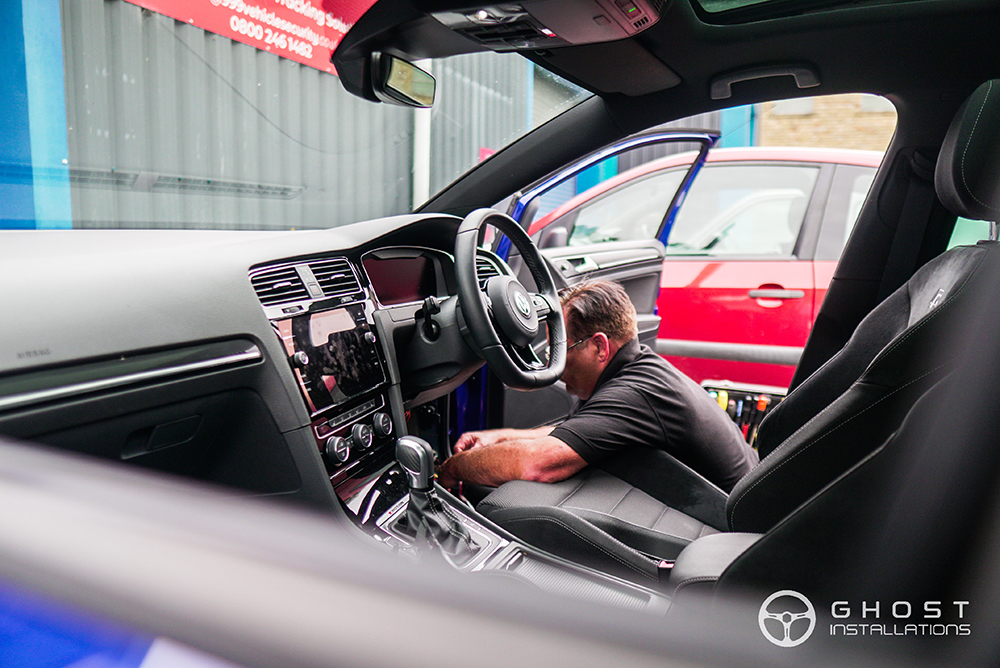
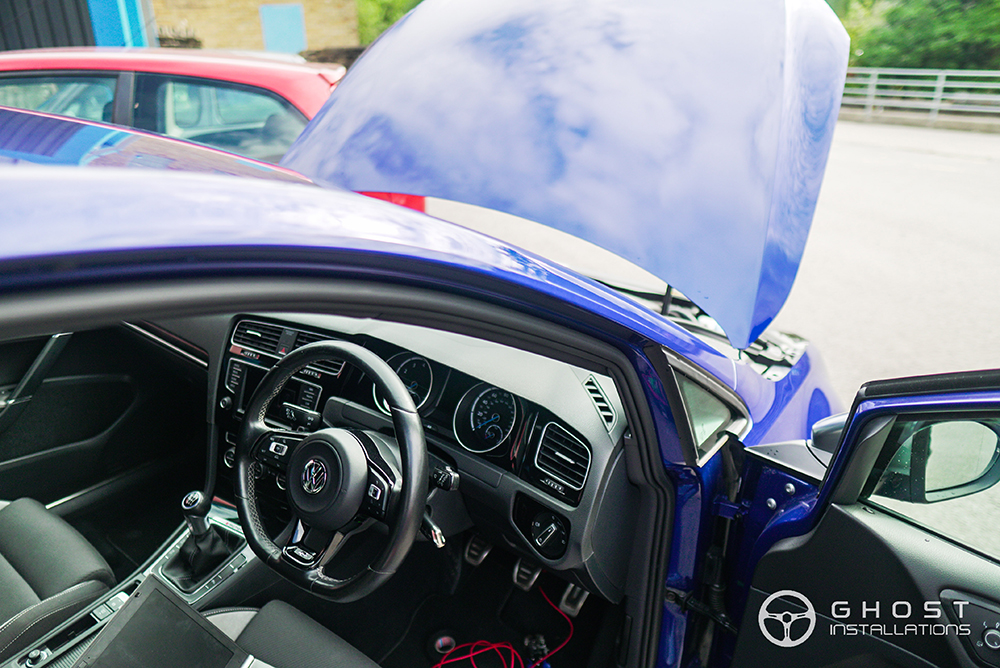
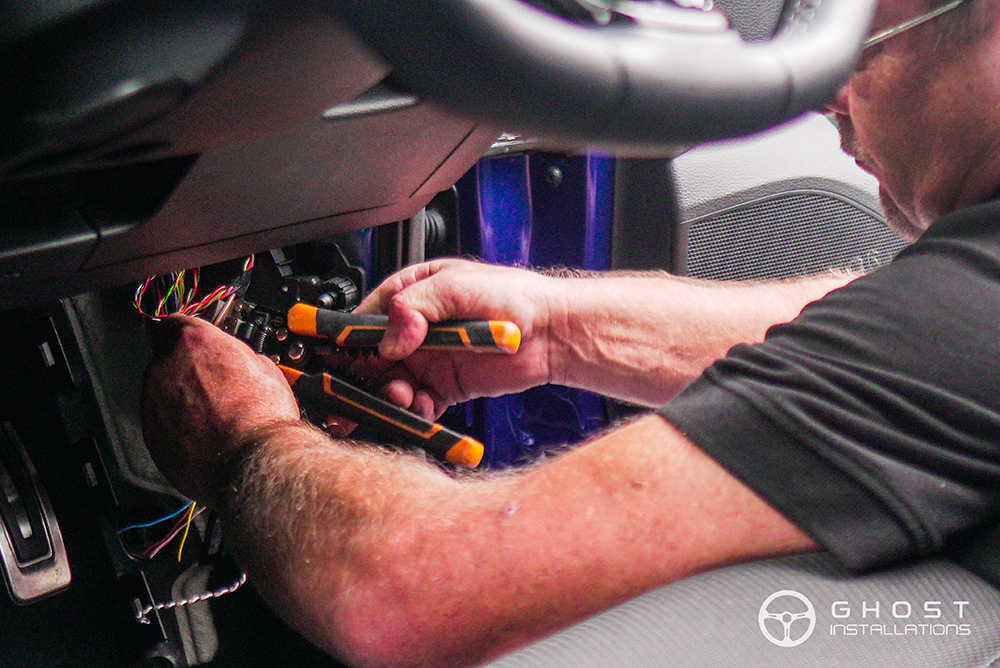
The Autowatch Ghost II is a covert aftermarket CAN bus immobiliser. It is not assigned a specific Thatcham category, but it is TASSA-accredited and widely recognised by insurers for its anti-theft technology, which defeats relay attacks, key cloning and key theft by requiring a personal PIN sequence to start the car. At Ghost Installations we fit Thatcham-approved S5 and S7 trackers and Category 1 and 2 alarm and immobiliser solutions, alongside the Ghost immobiliser, so every installation meets or exceeds insurer expectations.
Understanding the categories lets you match your security to your insurer without overspending. Check what your car already has: a factory Category 1 system, or a Category 2 immobiliser that could be upgraded to 2-1? If your insurer requires a tracker, decide whether S5 or S7 fits your vehicle’s value and risk. Above all, choosing Thatcham-approved devices means investing in vetted, insurer-recognised products rather than cheap gadgets that may offer little real protection.
For expert advice or to explore Thatcham-approved solutions, contact Ghost Installations or call 0800 246 1482.
What is a Thatcham Category 1 device? A Category 1 device is a combined electronic alarm and immobiliser, the highest standard for combined systems. It both alerts you to a break-in and prevents the car being driven away without the correct key.
What is the difference between Thatcham S5 and S7 trackers? Both provide GPS tracking and theft alerts. The difference is Automatic Driver Recognition (ADR): S5 includes an ADR driver tag and alerts a monitoring centre if the car moves without it, while S7 does not use a tag.
What replaced Thatcham Categories 5, 6 and 7? Since 2019, Category 5 became S5, Category 6 became S5 or S7 depending on whether it had ADR, and Category 7 became S7.
Is a Thatcham-approved device the same as insurance approved? They are closely linked. Insurers widely recognise Thatcham approval as proof a device has been independently tested, which is why “Thatcham approved” and “insurance approved” are often used interchangeably.
Do I need a Thatcham-approved tracker for my insurance? Many insurers require one for high-value or high-risk vehicles, often specifying S5 or S7. Always confirm the exact requirement with your insurer.
Is the Ghost immobiliser Thatcham approved? The Autowatch Ghost is not assigned a specific Thatcham category, but it is TASSA-accredited and widely recognised by insurers for its covert anti-theft technology.